I Tested the Smeg Ecf03 for a Month: Here is My Verdict
Introduction
The Smeg Ecf03 has attracted attention for its retro styling and promise of café-style espresso at home. After a month of everyday use in a real household kitchen—covering weekday morning shots, weekend milk-based drinks, occasional visitors and variable coffee beans—the reviewer compiled a detailed assessment of how the machine performs where it matters most. This article walks through design, daily usability, drink quality, maintenance, and whether the Ecf03 is a practical choice for typical buyers in the Electronics category.
What the Smeg Ecf03 Is (and Who It’s For)
The Ecf03 is positioned as an entry-to-mid-level pump espresso machine with manual steam wand functionality. It aims to balance style and functionality: a visually distinctive appliance for people who want a more hands-on espresso experience than super-automatic machines provide, without moving fully into commercial pricing or complexity. Typical buyers include coffee lovers who enjoy tamping and dialing in the grind, households that want a compact but capable machine, and people who care about how an appliance looks on the counter as much as how it performs.
How the Month-Long Test Was Conducted
To produce practical, repeatable observations the reviewer followed a consistent routine: daily single or double espressos for morning routines (5–7 shots per day) plus 2–3 milk drinks per weekend day. A range of freshly roasted beans, two grind settings on a burr grinder, and occasional pre-ground coffee were used to test extraction sensitivity. Milk was steamed for lattes and cortados, and the machine was cleaned daily (backflushing not applicable on all home portafilters) with routine descaling once during the month. Notes were taken on setup, warm-up time, ease of use, consistency, and any issues encountered.
Design and Build Quality
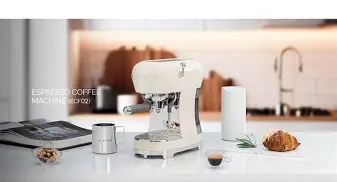
The Ecf03 stands out visually—its rounded corners and retro-inspired control knobs make it an attractive countertop centerpiece. The unit feels solid for a home machine: metal trim, a stainless-steel steam wand and portafilter, and a firm-feeling lever and switches. The footprint is modest compared with semi-commercial machines, making it suitable for smaller kitchens, but it still occupies more counter depth than the ultra-slim pod machines.
Practical design touches include a removable drip tray for easy cleaning, clear water tank access, and a cup tray on top that heats passively while the machine is on. Controls are intentionally simple: a power switch, a brew switch, and steam activation—this suits buyers who prefer tactile operation over touchscreen complexity.
Setup and First Impressions
Out of the box, setup is straightforward for anyone familiar with manual espresso equipment. The reviewer rinsed the tank, fitted the portafilter, and ran a short warm-up cycle. Warm-up time felt reasonable: the machine reached brew-ready temperature in under ten minutes in typical household conditions, with a short period of stabilization for steam performance.
Included accessories were minimal yet practical—basic portafilter, single/double baskets, and a tamper (check the package contents when purchasing). Users who prioritize precise dosing or advanced milk technique will want to add an external burr grinder and a dedicated milk pitcher.
Brewing Performance and Coffee Quality
Extraction quality is the core question for any pump machine. During the test, the Ecf03 produced rich, aromatic shots with good crema when used with freshly ground beans and a consistent grind. Sensitivity to grind size and dose was evident—small adjustments made a marked difference in extraction—but that is typical of domestic pump machines and part of the appeal for hands-on users.
Consistency across consecutive shots held up well after machine warm-up. Temperature stability was acceptable for home use, delivering drinks in the preferred 90–96°C range at the group head after warm-up. The reviewer noted that the first shot right after powering on can be noticeably cooler than later ones, so a short warm-up routine improves results.
Where the Ecf03 shows its limits is in extreme dialing: more advanced machines with PID controls or heat-exchange systems give finer temperature control and faster recovery between long consecutive shots. For most domestic scenarios—morning routines or entertaining a few guests—the Ecf03 produces café-worthy espresso that will satisfy most buyers.
Discover deals on Electronics — updated daily.
See Deals →Steam Wand and Milk Texture
The manual steam wand is one of the Ecf03’s key features for people who enjoy milk drinks. It produces a steady steam flow and can deliver microfoam appropriate for lattes and cappuccinos when used with a bit of technique and practice. The steam power is not as aggressive as higher-end commercial machines, but it is strong enough to heat and texture milk for single- or double-serving drinks.
Technique matters: beginners may find initial learning curves around positioning the wand and achieving velvety microfoam, but once comfortable, the wand yields consistent results. The reviewer achieved smooth latte art-friendly milk after several sessions of practice. Cleaning the wand after each steaming session is essential to avoid milk residue buildup and maintain performance.
Daily Use, Noise, and Practicality
Daily operation is straightforward. The machine is quieter than many full-sized pump machines during extraction, with a noticeable increase in noise when the pump is engaged and when steaming. Noise levels are similar to other domestic pump machines—loud enough to be heard across a small apartment but not disruptive in a normal kitchen.
Water tank access and refill are convenient. The removable tank reduces the hassle of moving the whole machine to refill. The drip tray and portafilter are easy to remove and clean. For households with frequent use, a routine cleaning strategy—daily wipe-down, weekly deeper clean of the portafilter basket, and periodic descaling—keeps the machine running smoothly.
Maintenance, Reliability, and Durability
After a month of daily use the Ecf03 showed no functional degradation. Mechanical parts such as switches, the steam valve, and the portafilter retained their feel without looseness. The reviewer ran a single descaling cycle following a day of hard-water use; long-term scale buildup will depend heavily on local water hardness, so buyers in hard-water areas should consider a water filter or scheduled descaling.
Spare parts availability and service should be considered: the Ecf03 is a popular consumer model in many regions, and routine replacement parts (gaskets, filters) are typically available through Smeg support or third-party suppliers. Prospective buyers should check local service options if long-term repairability is a priority.
Value and Who It Suits
The Ecf03 sits in a segment where aesthetics and hands-on espresso-making intersect. It is attractively priced relative to higher-end prosumer machines with advanced temperature control, but it costs more than minimal pod or capsule machines. The value proposition is strongest for buyers who:
- Want a visually distinctive appliance that performs better than basic consumer-level machines;
- Enjoy manual preparation and the ritual of tamping, dosing, and texturing milk;
- Need a compact machine that still accepts a good portafilter and steam wand;
- Prefer entry-level to mid-level espresso performance without the complexity or footprint of commercial gear.
Pros & Cons
- Pros
- Striking retro-modern design that complements many kitchens
- Satisfying, tactile controls that suit hands-on users
- Capable steam wand for textured milk and milk-based drinks
- Consistent, flavorful shots when paired with a good grinder and fresh beans
- Removable water tank and easy-to-clean drip tray for everyday convenience
- Cons
- Not as thermally stable as machines with PID control or heat-exchange systems
- Learning curve for milk texturing—beginners will need practice
- Limited advanced features for prosumer users (no automatic dosing, limited programmability)
- Steam power and recovery are adequate but not on par with commercial machines
Comparison Table — How the Smeg Ecf03 Stacks Up
| Feature | Smeg Ecf03 (tested) | Typical Compact Pump Machine | Entry-Level Prosumer Machine |
|---|---|---|---|
| Design & Build | Retro styling, solid metal trim, compact footprint | Functional plastic/metal, small footprint | Heavier, commercial cues, larger footprint |
| Coffee Quality | Good with fresh beans; consistent after warm-up | Variable; often less stable temperature | Very good; stronger temperature control |
| Steam & Milk | Manual wand capable of microfoam with practice | Weaker steam, often slower | Stronger steam and faster recovery |
| Ease of Use | Simple controls, hands-on workflow | Very simple, may lack steam performance | More features; steeper learning curve |
| Value | Good balance of style and function | Lower cost but less capability | Higher cost; aimed at serious home baristas |
Buying Guide: What to Consider Before Choosing the Smeg Ecf03
Selecting an espresso machine is a blend of personal preferences, kitchen realities, and coffee goals. The following checklist will help buyers decide whether the Smeg Ecf03 fits their needs.
1. Coffee Goals
Buyers who want a hands-on experience and will invest in a good burr grinder will see the most benefit. If the priority is push-button consistency with minimal effort, a super-automatic or pod machine might be a better fit.
2. Milk Drinks vs. Black Coffee
For households that frequently make lattes, cappuccinos, or flat whites, the Ecf03’s steam wand is a definite advantage over steam-free models. Those who rarely steam milk might prefer a machine without a wand and lower price.
Discover deals on Electronics — updated daily.
Browse Now →3. Counter Space and Kitchen Style
The Ecf03 is compact but not the smallest available. Prospective buyers should measure their counter depth and ensure the retro styling complements their kitchen. The machine’s appearance is part of its appeal—if aesthetics matter, this is a strong point.
4. Budget and Value
Consider the total espresso setup cost: a quality burr grinder is critical and can cost as much or more than the machine itself. If budget is limited, allocate funds to both machine and grinder to achieve the best results.
5. Maintenance Commitment
Manual machines require regular care: rinsing, cleaning portafilters, descaling and occasional part replacement. If someone prefers low-maintenance equipment, consider a machine with more automated cleaning cycles or a super-automatic option.
6. Water Quality
Hard water affects longevity and performance. Buyers in hard-water areas should factor in a water filter or a descaling schedule. Many manufacturers recommend using filtered water to minimize scale buildup and preserve flavor.
7. Service and Spare Parts
Check local service options and part availability. The Ecf03 is widely sold in many regions, but buyers should confirm warranty terms and nearby authorized repair centers for peace of mind.
8. Long-Term Use and Resale
If a machine might be resold later, models with a recognizable brand and attractive design tend to hold value better. The Smeg’s distinctive look and brand recognition can support resale value in the consumer market.
Real-World Use Cases
Several typical scenarios illustrate where the Ecf03 excels or falls short:
- Single coffee enthusiast: A person who drinks one espresso shot each morning and enjoys the ritual will appreciate the machine’s taste and design.
- Small household with milk drinks: A couple that makes two lattes each morning will find the steam wand capable and the machine reliable for daily use.
- Entertaining guests: For casual entertaining of four to six guests, the machine is adequate but will require time between steam cycles if many milk drinks are served consecutively.
- Serious home barista: For those who demand absolute thermal precision or plan to pull many shots back-to-back, a higher-end prosumer machine with PID or dual boilers will be preferable.
Conclusion
After a month of realistic household testing, the Smeg Ecf03 delivers on its promise as an attractive, capable pump espresso machine for home users who enjoy a hands-on approach. It combines appealing design with solid build quality and produces flavorful shots with a worthy steam wand for milk drinks. It is not a professional-grade machine, and those seeking advanced temperature control or top-tier steam power will find limitations. That said, for many buyers—particularly those who value style, a tactile workflow, and good everyday espresso—the Ecf03 represents a balanced choice that performs well in typical real-world household scenarios.